Walk down a quiet road in Buncombe County. Two lots. Same street. Same general area. Same town. One home costs $800,000 to build. The other costs $880,000 — with an identical house plan, the same finishes, and the same builder.
If you're shopping for land in Western North Carolina, someone probably told you to "budget X for a home in Asheville" or "homes around Hendersonville run Y." That advice costs money. We've seen it happen. Town-level averages don't account for the variable that actually drives the spread: the lot itself.
As builders, we think about lots differently than most people do. You see the view. You see the trees. We see the water line depth, the sewer main location, the slope, the build staging, and the access road grade. That's not pessimism — it's how you protect a budget.
This post breaks down Bucket 2 of the Custom Home Cost Guide. Site Improvements in real numbers. Not averages. Not guesses. Real ranges from real Kaizen Homes builds in Asheville, Hendersonville, Waynesville, Weaverville and the mountain communities beyond. If you're still evaluating which lot to buy, start with our builder's lot checklist first.
"Two identical homes on different lots. $50,000 foundation on one. $250,000 on the other. Same house plan. Same builder. Different earth."
The simplest water scenario: you're on a municipal line, the meter tap is at the road, and you tie in. That's $4,000–$6,000. Easy lot.
The complex scenario? You're on a quiet country road. The municipal line is 300 feet down the property, under someone else's driveway. You need curb cuts, trenching, paving repair, and a new tap. You're now looking at $15,000–$20,000 for water alone.
If you're off-grid, and about 50% of Kaizen Homes builds are, you're drilling a well. A clean well on good geology runs $10,000–$14,000 all-in. A deep well on difficult geology, with a long trench run back to the house, can reach $30,000.
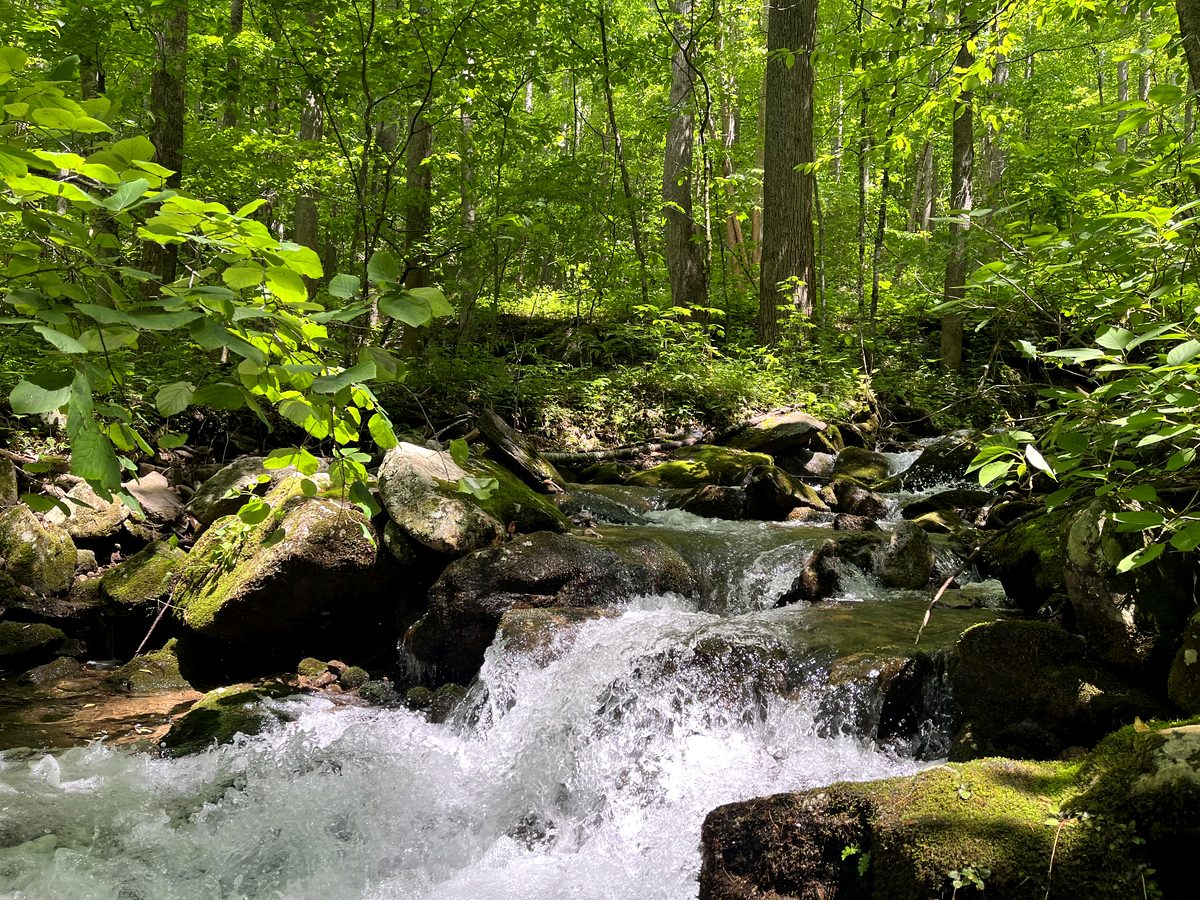
WNC mountain water
Municipal sewer is straightforward when the math works. A simple 4-inch connection on your property side of the road: $7,000–$10,000. If the sewer main is on the opposite side, or 20 feet lower in elevation, that number climbs, $15,000–$25,000 once you account for road bores, elevation pumping, and permit requirements.
Over 50% of Kaizen builds are septic. For Mills River, Black Mountain, Fairview and the mountain communities beyond, that's just the reality. A standard 3-bedroom gravity system, approved by the county, engineered, installed, and site-prepped, runs about $15,000. Move to a pumped system because your lot won't drain to daylight. Now you're at $20,000–$30,000. Add a drip irrigation system on marginal soils: $35,000–$50,000+.
The county engineer or a hired soil scientist will tell you what you can build on your lot. You'll want to know that before you make the offer.
The simplest driveway is a two-car parking area on gravel: $5,000. If your lot is a long way up the mountain ~500 feet, switchbacks, culverts, drainage add $30,000–$50,000. Then there's surface choice: asphalt or concrete over gravel adds another $20,000–$40,000.
Now add retaining walls. A small lot on a tight slope might need 30 feet of retaining wall to create usable space, $10,000–$30,000. A very steep lot with significant grading? We've seen retaining wall systems that exceed $100,000. When the terrain demands it, it demands it.
Post-Hurricane Helene, erosion control has become strictly enforced. Budget for silt fences, inlet sediment traps, and seeding. Not just during construction, but as an ongoing line item through certificate of occupancy.
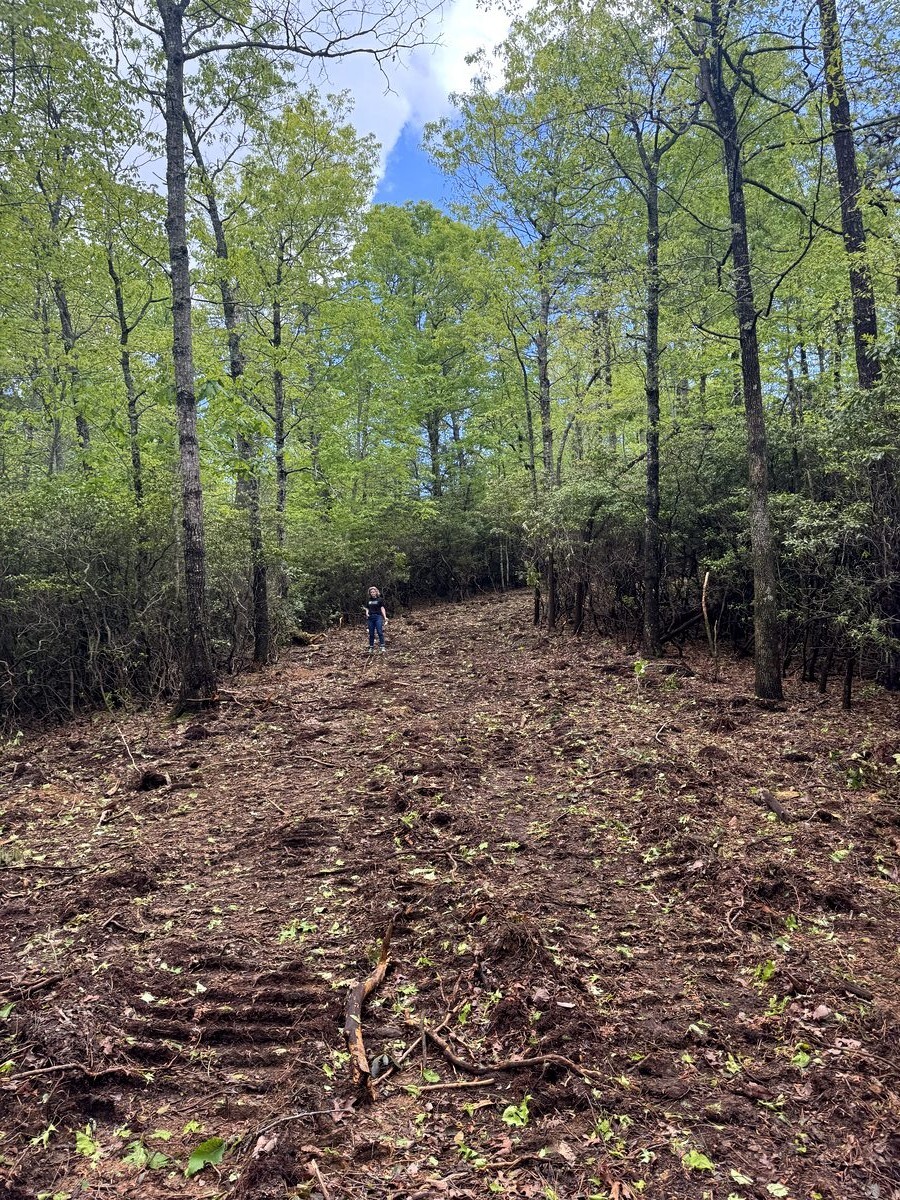
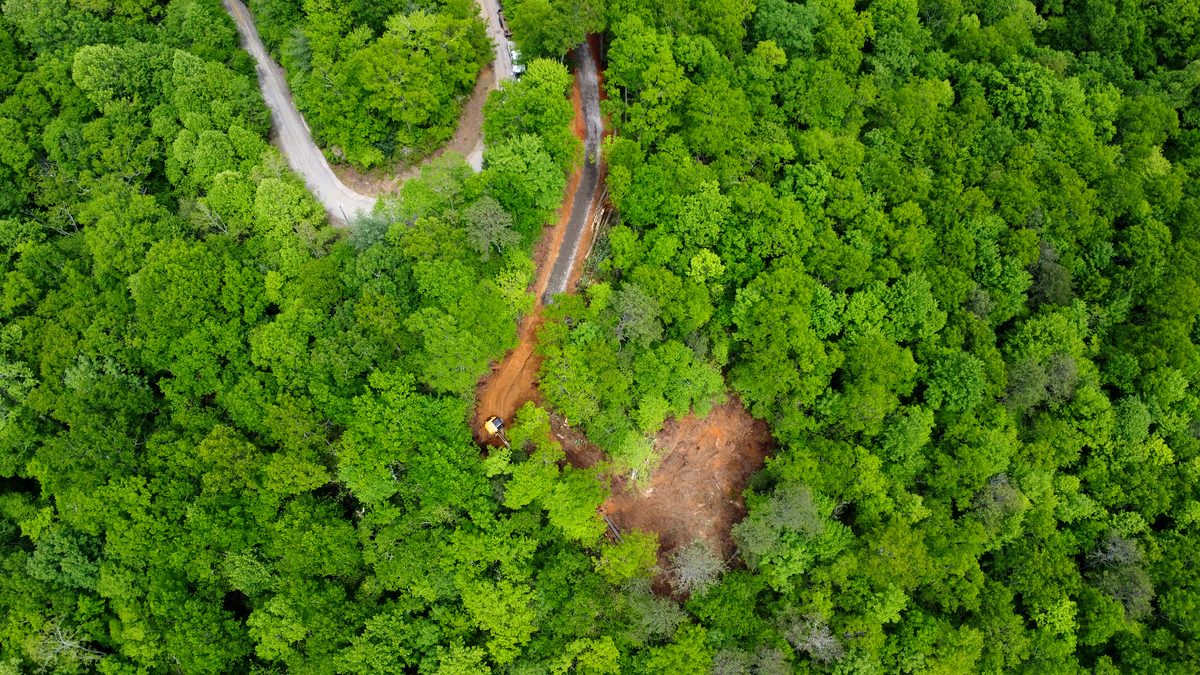
Clearing for a 400' driveway
The easiest lot is the one where you pull up, and the bulldozer pushes dirt without cutting a single tree. Those are rare in WNC.
Most lots here have timber. Heavily wooded? Clearing cost goes up. Tree stumps need to be hauled off-site. A separate line item from clearing itself. That distinction matters: lot clearing and grading on a standard wooded mountain parcel runs $15,000–$30,000. If debris volume is high and haul distance is significant, you're adding real money.
Very steep lots demand experienced contractors. Slopes create safety issues, sliding risk, and material-handling challenges that show up in labor rates. Post-Helene, erosion control during clearing is non-negotiable. Seeding, matting, and runoff management happen as you work, not after.
Most Kaizen Homes builds get a walk-out basement. Not as a luxury, but as a practical response to WNC topography. You're building into the hillside. This space handles mechanical equipment, storage, and often becomes finished living area. But the foundation cost depends entirely on what the earth tells you.
A geotechnical exploration before you finalize the site plan runs $2,000–$5,000. It saves money by identifying solid ground, predicting rock, and guiding foundation design before excavation begins, not during it.
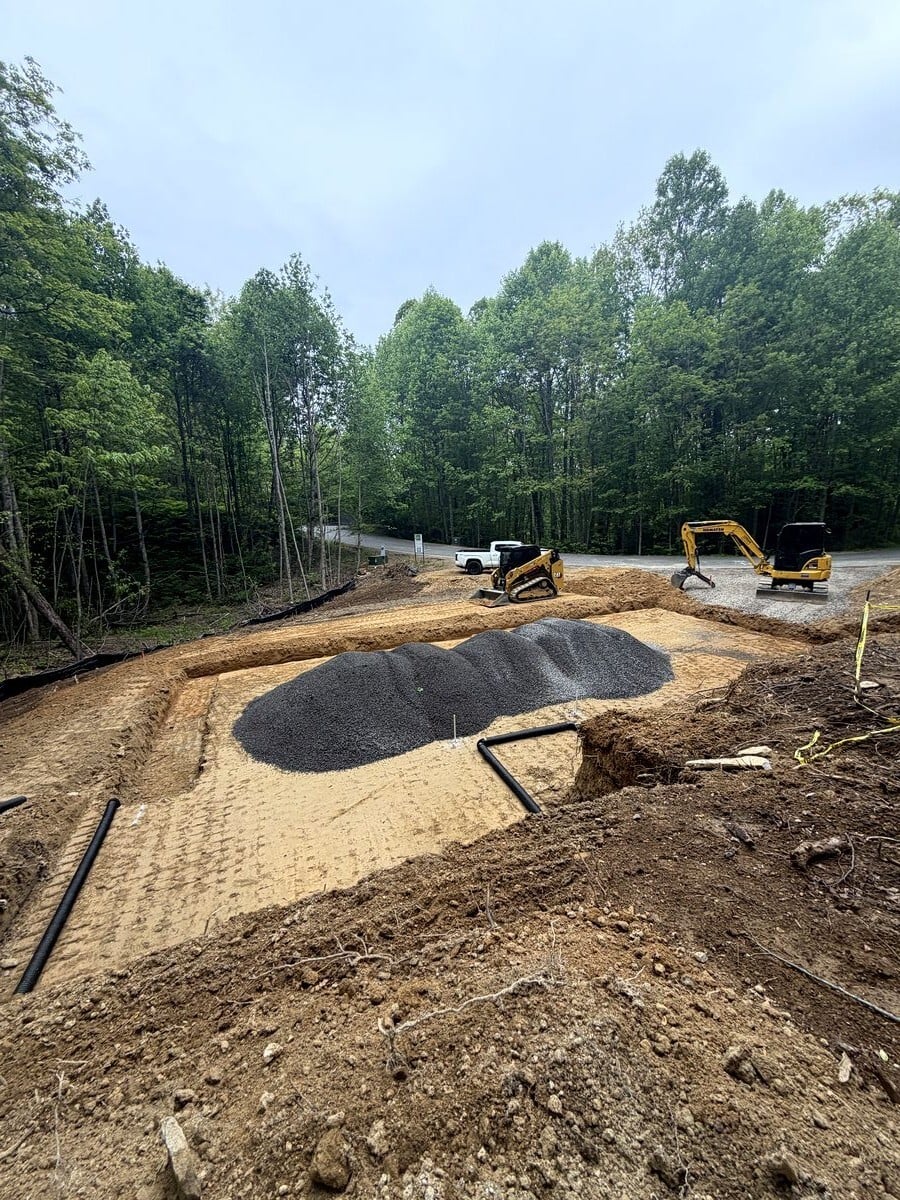
Foundation prep for Superior Walls with a washed stone footing
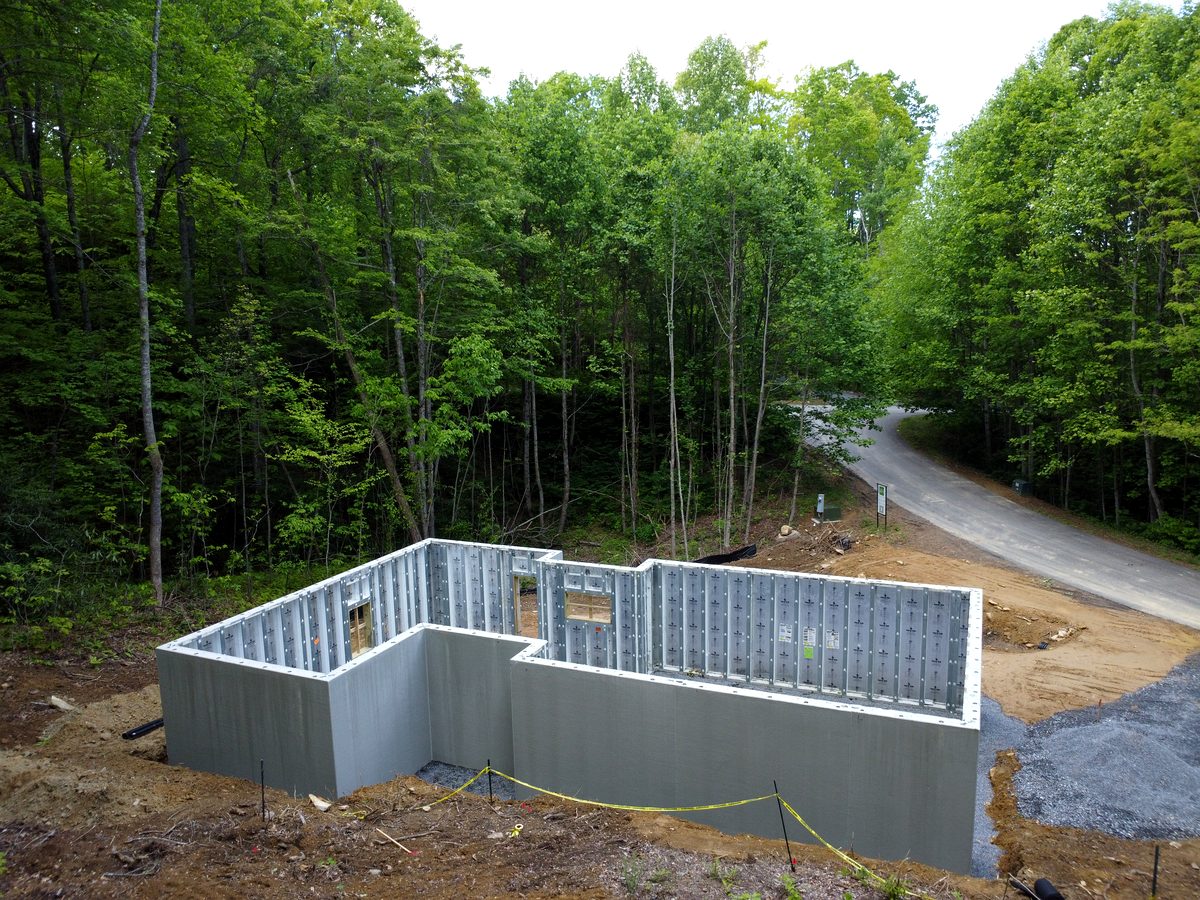
Superior Walls on the stone footing
Here's what we can't predict with confidence: rock. It shows up. Sometimes a little, sometimes a lot. You can see indicators on the surface. Exposed outcrops, thin soil over bedrock but you can't truly see below ground until you dig.
A geotechnical report reduces risk by identifying solid strata, but it's not a crystal ball. Some builds navigate rock just fine. It becomes part of the landscape. Others hit virgin stone at 8 feet and require blasting, removal, and re-engineering of the foundation plan. When that happens mid-build, it's expensive in both dollars and schedule.
Starting with a landscape plan and geotechnical discovery and we can discuss how much to plan for rock contingency. Include it in your budget before you need it.
Mountain sites demand attention to logistics. You need staging area for materials. Large delivery trucks, concrete, framing packages, mechanical. Need reliable access throughout the build. Steep grades mean crew safety considerations at every phase.
Tight lots bring community impact into the equation too: material staging, shared road use, neighbor visibility. These costs don't always appear as a line item, but they drive schedule and labor throughout the home build. Budget for them even if they don't have their own row on the estimate.
When the Lot Surprises You:
The $85,000 Root Ball
A cabin under construction. The owner had found the "perfect spot on the knoll" Tucked on the mountain side, not flagged as steep slope by the county. They were excited. We started.
We took down the largest tree on the property. The root ball was six feet deep.
When you excavate a six-foot-deep root ball, you disturb the virgin soil you've been counting on for footings. That soil, the ground beneath the roots, wasn't stable. The footing plan had to change.
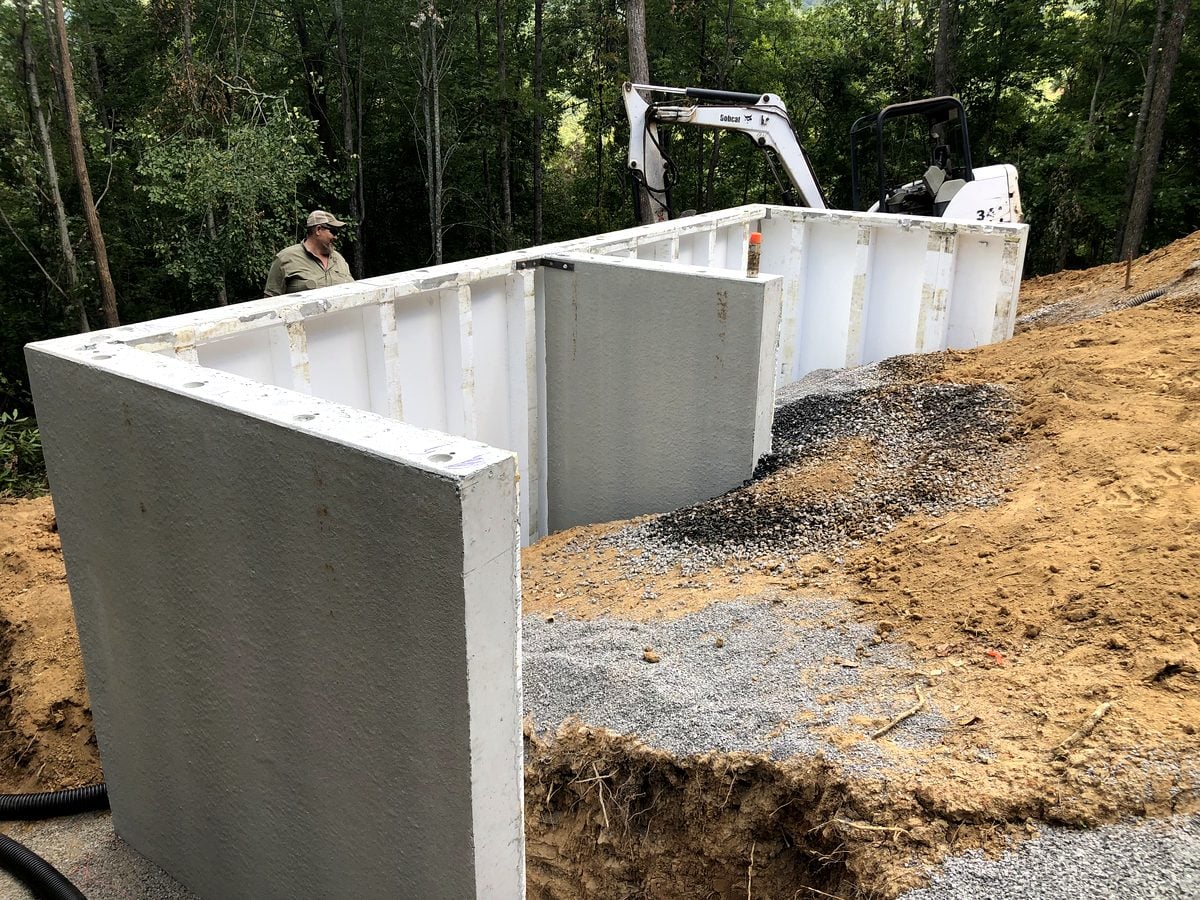
Solution: stack eight feet of additional basement wall and backfill the interior with stone to bring the original basement floor level back up. This added structural complexity to the under-half of the house before framing began.
The lesson: lots surprise you. That's why contingency matters. That's why a geotechnical report and builder experience matter before you break ground.
How to Evaluate a Lot Before You Buy
Here's what we look for when we walk a property:
The best time to evaluate a lot is before you make the offer. That's when knowledge saves money. Before you walk a property, work through our 35-item lot due diligence checklist. It's built around the same categories. We offer Land Search Guidance for clients exploring WNC property. It's worth the conversation before you commit to a purchase price.
Know your numbers before you buy.
Lot complexity isn't mystery — it's math. Use the tools below to move from guessing to knowing.
Know what your lot is really going to cost.
The Build Calculator accounts for site complexity, not just house square footage.
Open Build Calculator →