5 Min Read
Floor plan decisions are where a lot of custom home projects get stuck. Clients come in with strong opinions — usually shaped by a house they grew up in or a floor plan they saw online — but the real question isn't which style is more popular right now. It's which layout actually fits how you live, and how you'll live ten or twenty years from now.
In Western North Carolina, that question gets more interesting. Mountain lots shape floor plans in ways flat land doesn't. A long view corridor, a steep grade, or a south-facing ridge changes what's possible — and what makes sense. At Kaizen Homes, the best floor plans don't start with a style preference. They start with the site and the life being lived there.
Here's what to understand about both approaches before you decide.
What Defines an Open Concept Floor Plan?
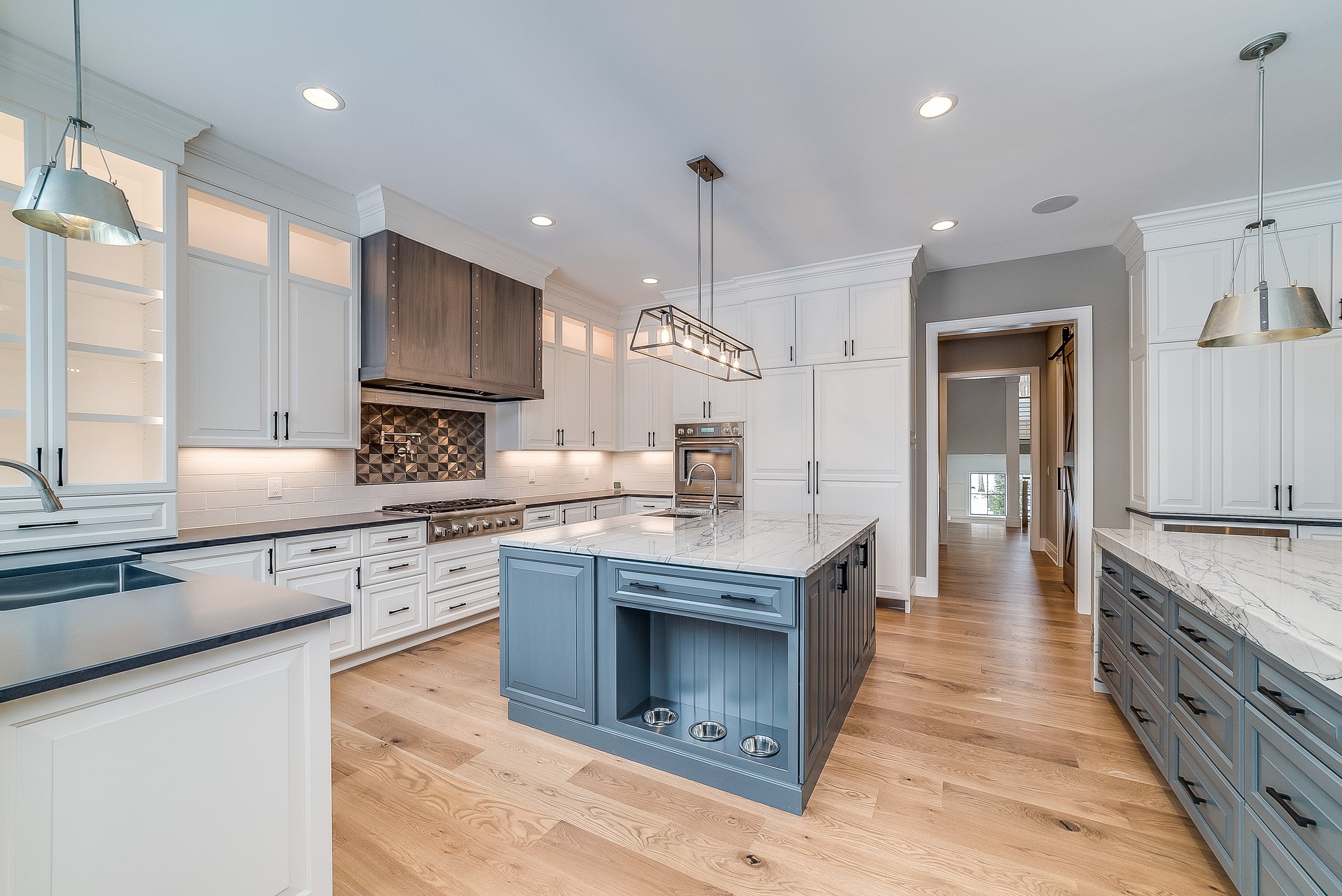
An open concept floor plan combines the primary living areas — kitchen, dining, and living room — into a single connected space. Walls come down, sightlines open up, and the home feels larger than its square footage would suggest.
In mountain homes around Asheville, open layouts pair naturally with large windows, vaulted ceilings, and direct access to decks or screened porches. When the living area flows toward a wooded ridge or a long mountain view, that connection becomes part of daily life rather than something you have to seek out.
Where open layouts work well:
- Households that spend most of their time in shared spaces
- Families with young children who need line-of-sight across the home
- Clients who entertain regularly and want the kitchen included in the social space
- Empty nesters planning for ease of movement and fewer barriers as mobility changes
Where open layouts require more planning:
- Sound carries. A conversation in the kitchen is a conversation in the living room. That's manageable with the right layout, but it's worth designing for — not ignoring.
- Heating and conditioning large open volumes in mountain climates takes more thought. Kaizen Homes accounts for this in the building envelope design.
- Fewer walls means fewer places for storage, built-ins, and visual anchors. Good open layouts use structure, ceiling changes, and millwork to define zones without closing the space off.
What Defines a Traditional Floor Plan?
A traditional floor plan uses defined rooms with walls and doors between living, dining, working, and sleeping areas. Each space has a clear purpose. There's a sense of order and separation that a lot of people find genuinely comfortable — not because it's old-fashioned, but because it matches how they actually use their home.
Traditional layouts are often dismissed as dated, but that's mostly a trend conversation, not a functional one. A well-proportioned traditional home with modern materials, good natural light, and thoughtful circulation doesn't feel closed in. It feels settled.
Where traditional layouts hold up:
- Households where people need to work, study, or decompress independently without negotiating shared space
- Multi-generational homes where privacy matters as much as connection
- Clients who want clearly defined rooms for dining, sitting, and gathering — spaces that signal their purpose
- Anyone who's lived in an open plan and found it exhausting
Where traditional layouts need attention:
- Rooms can feel dark if windows aren't sized and placed intentionally
- Narrow hallways and abrupt transitions between spaces are the enemy of a good traditional floor plan — proportion matters more here than in open layouts
- Traditional doesn't have to mean closed off. Pocket doors, pass-throughs, and partial walls can add permeability without losing the structure
Floor Plans and Aging in Place
This is where floor plan conversations get the most practical. If you're building a home you intend to stay in for the long term, the layout decisions you make now determine whether the home works for you at 50, at 70, and beyond.
What Kaizen Homes builds into aging-in-place floor plans from the start:
- Primary bedroom and full bath on the main level — no stairs required for daily living
- Wider doorways and hallways (36" minimum, 42" preferred in key areas)
- Minimal thresholds between rooms and to outdoor spaces
- Flex rooms that can serve as a guest suite now and a caregiver suite later
- Walk-in showers blocked and plumbed for a bench or grab bars, even if they're not installed on day one
Both open and traditional layouts can support aging in place. Open plans make it easier to move between spaces. Traditional plans make it easier to section off private or accessible areas without retrofitting. The floor plan style matters less than whether accessibility was part of the design conversation from the beginning — which is one reason Kaizen Homes raises it early in every project.
Designing for WNC Mountain Lots
Sloped lots change the calculus on floor plans. When your home steps down a hillside, the "main level" might be entry-level on one side and second-story on the other. Open plans on sloped lots can capture views in ways that flat-lot layouts can't — but they also require more attention to how the home sits on grade, where the mechanical systems live, and how outdoor access works from multiple levels.
In Buncombe and Henderson counties, Kaizen Homes regularly designs homes where the primary living level is elevated to catch a long view, with bedrooms or bonus space tucked into the lower grade. That vertical stacking influences whether an open or traditional layout makes more sense — and it's part of why floor plan decisions can't be made from a catalog. They have to be made with the specific lot in front of you.
Flexibility Across Life Stages
The homes that hold their value — and their livability — longest are the ones designed with some built-in range. That doesn't mean designing a vague, neutral home. It means identifying which spaces should be anchored in purpose and which should be able to pivot.
Rooms Kaizen Homes commonly designs for flexibility:
- A room off the main living area that works as a home office now and a bedroom later
- A lower-level suite with a private entrance for adult children, aging parents, or guests
- Storage and utility spaces sized to scale with how a household actually changes
This matters for both open and traditional floor plans. The style doesn't determine flexibility — the planning does. Kaizen Homes talks through future-proof home design with every client because the decisions that enable it happen during design, not during a renovation five years later.
Which Layout Is Right for You?
There isn't a universal answer, and anyone who tells you one style is objectively better is selling you something.
Across the custom homes Kaizen Homes has built in Asheville and Western North Carolina, clients who come in strongly attached to a style often land somewhere in between. A hybrid floor plan — open kitchen and living area, more defined dining and bedroom zones — tends to be where thoughtful custom design ends up. Not because it's a compromise, but because it's what the life actually called for.
The right floor plan comes out of a direct conversation about how you use your home now, what you expect to need in 10 and 20 years, what the lot allows, and what the budget supports. That conversation is what Kaizen Homes is built to have.
Working With Kaizen Homes on Your Floor Plan
At Kaizen Homes, floor plan decisions happen inside the design-build process, not before it. Kaizen Homes doesn't hand clients a catalog of options. Every project works through site conditions, lifestyle, and long-term goals together — and the floor plan emerges from that.
Jonathan has built homes across Buncombe, Henderson, and Haywood counties and has worked through every variation of this decision. If you're thinking seriously about building, the best next step is a discovery conversation — to talk through what the land allows and what the layout needs to do before you've committed to anything. If you're also in the process of evaluating builders, our guide to choosing a custom home builder in Asheville covers what to look for in proposals and how to compare finalists.